Academic Programme

Medicine 4R: Repair, Replace, Regenerate, Reprogramme - Master's Level

Specialisations: Medicine 4R: Repair, Replace, Regenerate, Reprogramme
Diplôme national de master contrôlé par l'État

Résumé

Objectives: Become key contributors to the design and development of innovative health products at the heart of 4R medicine (Repair, Replace, Regenerate, Reprogram). Read more

Accéder aux sections de la fiche

Details

General information

- Degree: Master's
- Entry: September 2026
- Duration: 1 or 2 years
- Location: Nantes - Faculty of Sciences et Techniques (M1) / Faculty of Medecine & Pharmacy (M2)
- Langue: English / French
- Full time Programme

Download full programme
 

Laboratories

Internships and International mobility

Agenda

  • A welcome meeting : September 2026
  • Career Exploration Day: October 2026
  • Winter School : January 2026
  • Hackathon : spring 2026
  • Summer School : July, 2 and 3 2026
Follow us on Linkedin
 

Introduction

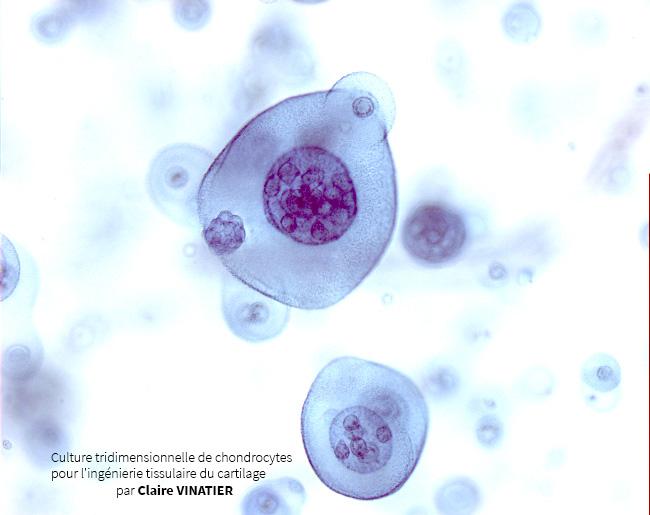
Chondrocytes en 3D The M4R Master’s program (Repair, Replace, Regenerate, Reprogram) is an international training programme dedicated to new therapeutic strategies and the development of innovative health products in 4R medicine. The program is supported by two high-level research laboratories: RMeS and TarGET.

These approaches aim to replace, repair, regenerate, or reprogram cells, tissues, or organs in order to restore their biological functions. They include regenerative medicine (tissue engineering products, cell therapies, and gene therapies), biotechnologies (biopharmaceuticals), and medical devices.

By nature interdisciplinary and transdisciplinary, the M4R master’s programme integrates cell biology, molecular biology, gene therapy, biomaterials science, chemistry, physics, and pharmaceutical formulation.

Over the two-year program, students can tailor their training toward clinical research, experimental research, or omics data analysis.

Experimental Research : Designed for students who wish to pursue careers in academic research or biomedical research in industry.
  • Develops key skills in scientific methodology, experimental approaches, and critical data analysis in life and health sciences
  • Emphasizes experimental design, laboratory techniques, and rigorous interpretation of scientific results 
Clinical Research : Designed for students who want to translate today’s knowledge into tomorrow’s therapies.
  • Develops skills required to understand pathophysiological mechanisms, design and conduct clinical studies, and evaluate new treatments or medical devices
  • Emphasizes clinical trial methodology, clinical data analysis, and health regulations 
Omics Data Research and Analysis : Designed for students interested in bioinformatics and omics data analysis.
  • Develops expertise in exploring complex relationships between genes, proteins, metabolites, and other biomolecules
  • Focuses on multidimensional approaches, advanced computational tools, and integrative interpretation of omics data 

Why choose this Master’s programme?

  • A multidisciplinary and versatile training programme dedicated to innovative health products
  • Research immersion from the first year (M1): join a research laboratory from the beginning of the program and develop strong practical and theoretical skills
  • Join an excellence track labeled Master–Doctorate Programme, supported by internationally recognized research laboratories
  • A high-level scientific environment
  • Training in research methodology and cutting-edge technologies
  • Guidance and support for pursuing a PhD

Programme Expertise

  • Master the development, regulation, and investigation tools related to innovative health products in 4R medicine
  • Develop Advanced Therapy Medicinal Products (ATMPs) that open new perspectives in regenerative medicine, including: cell therapy, tissue engineering (biomaterials and bioprinting strategies), gene therapy
  • Design and evaluate biopharmaceuticals, such as recombinant proteins and monoclonal antibodies
  • Contribute to the development of Medical Devices

Students gain a comprehensive understanding of the entire innovation pipeline, from the design to the evaluation of innovative therapies.

International Partnerships:

What mobility grants are available?

  • Financial support for incoming mobility : for students currently studying abroad who are hosted in our affiliated laboratories.
  • Financial support  for outgoing mobility : for Master’s students undertaking an academic or research stay abroad. 

Admission

Entry requirement

Academic requirement

  • A validated Bachelor's degree (or diploma in the process of validation) in Life Sciences or Chemistry (with knowledge in Biology) with a very satisfactory average.
  • Good disciplinary knowledge (Cellular Biology, Molecular Biology and/or Biochemistry and/or physical-chemistry) as well as basic scientific skills.
  • Good disciplinary knowledge of Bachelor’s degree in Cellular Biology and Molecular Biology concerning the expression of prokaryotic and eukaryotic genomes

Language requirement:

Minimum level B2 in French (DELF or TCF) required for entry into the Master's programme

Application

Application procedure

Application procedure for the 2026-27 academic year :

If you are a French national or a citizen of the European Economic Area + Switzerland, Monaco and Andorra: to find out when the platform opens and closes, and to submit your application, go to the Master's application page.

You are a citizen of a country outside the European Economic Area + Switzerland, Monaco and Andorra :

  • Your country is concerned by the Campus France procedure (cf.: List of countries concerned): you must apply exclusively via the "Etudes en France" platform. Note that applications are generally registered between October and January of the previous year.
  • Your country is not concerned by the Campus France procedure :
    • To apply for M1, please use the Mon Master platform.
    • To apply for M2, please follow the application procedure for international students without access documents (SURF).

For further information, please consult our Admission to Nantes University page.

Additional information :

Tuition fees and Scholarships 

Welcome grant: Graduate programmes offer a €1,500 Welcome Scholarship for the best international students. Please prepare your application carefully to demonstrate your motivation for the programme.

Internship: You may complete your internship abroad, with our financial support depending on the host country and the length of your internship. If you choose to do it in France, you will receive financial support of approximately €600 per month.

Programme

Master 1:
  • Specific courses: Biomaterials and additive manufacturing, Tissue engineering and biotechnologies, Cell therapy in 4R medicine, Gene therapy in 4R medicine, Health product regulation.
  • Courses are offered à la carte according to the chosen profile: Experimental Research, Clinical Research or Data Analysis.
  • Cross-disciplinary courses: Scientific English, Genome Manipulation, Bioinformatics.
  • 8- to 12-week internship.
Master 2:
  • Specific courses: Cell and Gene Therapies, Health Product Regulation, From Biomaterials to Advanced Medical Therapies.
  • Courses are offered à la carte according to the chosen profile: Experimental Research, Clinical Research or Data Analysis.
  • Cross-disciplinary courses: interdisciplinary project.
  • 6-month internship
Download Full Programme 

What's next?

Level of education obtained after completion

Bac+5

Competencies acquired

  • To conduct research and analysis of bibliographic and technological resources in M4R field
  • To design a research project in M4R field
  • To develop an experiment in M4R field
  • To analyse complex scientific data
  • To promotre results and scientific production (To communicating in science in writing and orally and to learn to write an article in English)
  • To understand the clinical investigation methods for innovative therapy products

Further studies

After graduating with the 2-year Master's degree, opportunities to pursue the GP M4R, PhD programme will be offered.

Career opportunities

Business sectors

Experimental Research: Research engineer, research scientist, R&D engineer, project manager, business development associate.
Clinical Research: Clinical Research Associate (CRA), Clinical Trial Coordinator, Clinical Project Manager.
Omics Data Research and Analysis: Bioinformatics engineer, computational biologist, multi-omics data analyst, bioanalyst, R&D engineer. 

Employment Sectors: Academic research laboratories, biotechnology and R&D companies, pharmaceutical and healthcare industries. 
Updated on 09 March 2026.